
From Dhaka to Three Continents: Deals, Deployments, and a Product That Sells Itself
A NOTE FROM THE EDITOR
April proved something we had been working toward for a long time.
A factory owner discovered Tipsoi online at 11 pm, selected a package, paid through bKash, and had the system running by morning.
There was no sales call, no proposal, no demo, and no long back-and-forth. Our digital acquisition engine worked quietly in the background, helping the customer understand the value, make a decision, and get started on his own.
The system did the heavy lifting before the sales team ever had to step in.
Here is everything else that happened.
April 2026AT A GLANCE
- Three Continents, One Month — Dubai, Mauritius, and Istanbul
- Investors Are Paying Attention- Annapurna Ltd visits Dhaka
- When the Product Sells Itself- Touchless revenue goes live
- Tipsoi and BRACNet: A Partnership Signed
- What Our Own Hybrid Experiment Taught Us
- Inside Tipsoi- April moments
THE MONTH IN DETAIL
From ISPs to factories, Mauritius to Istanbul- here is everything that happened in April.
THREE CONTINENTS, ONE MONTH
Dubai. Mauritius. Istanbul. April in numbers.
March marked a historic moment for Tipsoi — our very first international work orders are now live.
At Istanbul Airport, Turkey, our device has been deployed, and online onboarding is complete. The airport authority’s partner, ZK Software, is now working directly with us to onboard the remaining staff. Meanwhile, in Mauritius, a construction site client has placed a work order, with our Tipsoi software and the D505p portable device at its core. A new lead from Binghatti (ergonomics sector) has also conducted a field visit to a large factory site where location tracking will soon be needed — confirmation expected shortly.
The workforce management software market in MENA and South Asia is projected to grow at 14.3% CAGR through 2028. — MarketsandMarkets
In Mauritius, we completed the software and device handover, and the client went live immediately. This is our first fully operational deployment in Africa. That matters to us. It means our platform can be localized and delivered reliably outside South Asia, which is something we needed to demonstrate, and now have.
At Istanbul Airport, Phase 1 is done, and Phase 2 is underway. Testing has moved into more advanced card integration scenarios. The Fastface 8 device cleared HID card testing successfully, a meaningful result for a high-security environment with thousands of people moving through it daily.
INVESTORS ARE PAYING ATTENTION.
A London and Singapore-based private equity firm visited our Dhaka office.
In April, the team from Annapurna Ltd, a PE firm focused on technology and energy, operating out of London and Singapore, came to Dhaka. They toured our office, met the team, and spent real time understanding what we are building.
Annapurna Ltd is currently exploring an investment in Tipsoi. We are not announcing a deal. This is an active conversation, and we want to be upfront about that with our community.
HR tech investment globally grew 32% year-on-year in 2024, with emerging markets attracting a growing share of that capital. — PitchBook HR Tech Report
What the visit signals is worth saying plainly. Venkat Siva, who typically focuses on high-growth technology companies in developed markets, is now looking at Bangladesh. Not out of curiosity, they come when they see real traction, a product with staying power, and a market that is beginning to open up. Tipsoi has crossed 1,100 active clients and over 106,585 platform users. Those numbers do the explaining.
We are keeping our heads down and building. We will share updates as things develop.
WHEN THE PRODUCT SELLS ITSELF
No salesperson. No demo call. Just a business owner, a payment page, and a system that works.
It started with ISPs. When we built V3 around location tracking and self-onboarding, we wanted to see if a business owner could sign up, set up their device, and go live without ever speaking to anyone at Tipsoi. They could. And once we saw that working, the question became obvious: where else does this apply?
V4 took the same model into manufacturing factories and retail stores. The answer came quickly. Within days of the campaign going live, leads that had been sitting idle converted into work orders.
67% of HR managers say manual attendance tracking is their most time-consuming administrative task. — SHRM Workforce Report
Factories managing large shift workforces found the setup straightforward. Retail stores dealing with daily staff turnover saw it as a solution they could actually act on without a procurement cycle.
The insight here is not about a product feature. It is about what happens when you remove friction from the buying decision entirely. A business owner should not have to wait three weeks for a vendor meeting to solve a problem they already understand. With touchless onboarding, they do not have to.
TIPSOI AND BRACNET: A PARTNERSHIP SIGNED
Enterprise HR, built in Bangladesh, is now scaling through Bangladesh's largest ISP.
This month, Tipsoi signed a strategic partnership with BRACNet, Bangladesh’s largest ISP, operating across thousands of locations nationwide. Under this partnership, BRACNet will sell Tipsoi’s HR and attendance solution directly to its client base.
That is a big deal, and we want to explain why.
arge organizations in Bangladesh have spent years working around HR systems that were not built for local workforce patterns, local compliance needs, or local scale. The usual answer was to import something expensive and spend months configuring it. This partnership changes that equation.
Organizations with standardized HR systems across locations reduce payroll processing time by up to 40%. —- Deloitte Global HR Survey
A locally built platform, distributed through the country’s largest ISP network, reaching businesses that have never had access to proper workforce management tools before.
Enterprise-grade HR technology no longer has to come from outside the country. And now, it does not have to find its own way to market either.
WHAT OUR OWN HYBRID EXPERIMENT TAUGHT US
We tried a 3+3 schedule. Something unexpected happened.
In April, our sales team shifted to a hybrid schedule, working three days from the office and three days remotely. The goal was simple: create more flexibility, reduce commute pressure, and help the team work in a way that felt more balanced and productive.
What stood out most was how quickly the benefit extended beyond the sales team.
On remote days, the office became noticeably calmer and more efficient. Noise levels dropped, desks became easier to access, and meeting rooms that were usually difficult to book became available for focused work and team discussions. A change designed to support one team ended up creating a better working environment for everyone in the building.
For us, April showed that flexibility does not have to reduce control. With the right system, it can create more clarity, better space utilisation, and a more productive workplace for everyone.
INSIDE TIPSOI: APRIL MOMENTS
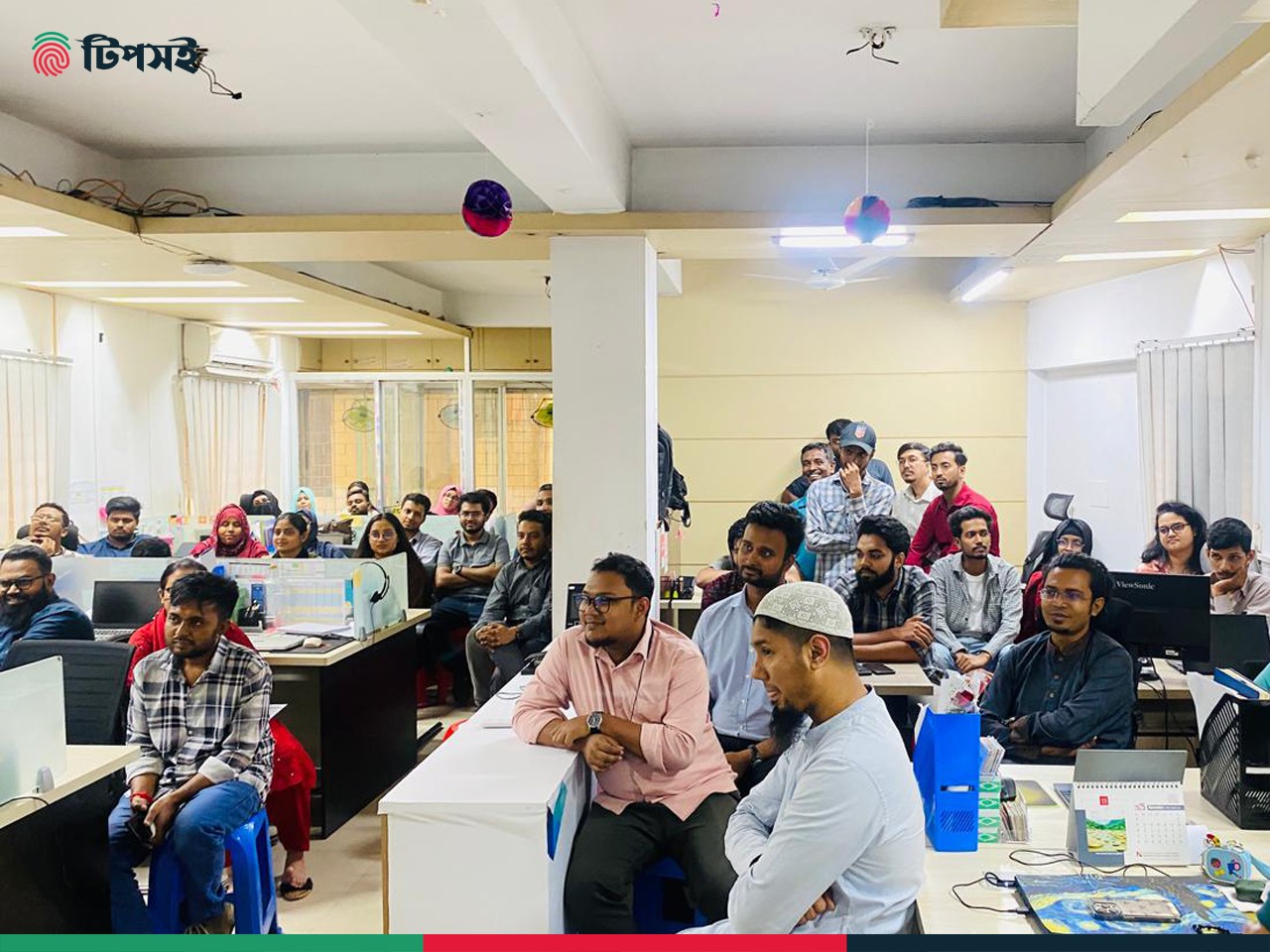
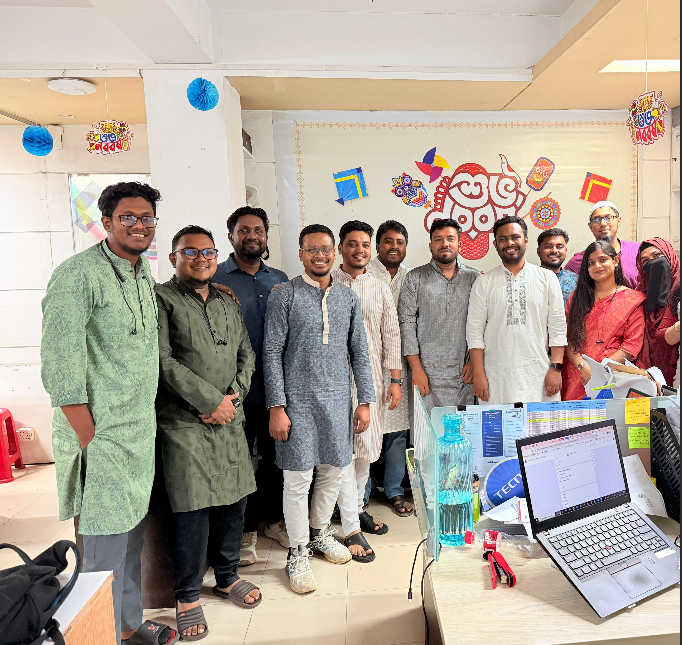
On April 14th, the whole team came together for Pahela Boishakh. We held a Town Hall and recognized the standout performers from Q1. The awards were genuinely earned, and it showed. Days like that remind you what the work is actually for.
We also strengthened our creative team this month. A graphic designer with over ten years of experience joined us, and we started working with an external design partner. Good design is not decoration. It is how ideas reach people.
April was one of those months that makes you want to move faster. New industries, new markets, new conversations with people who believe in what we are building.